
As I slide open the back door to let my dog outside, cool, crisp air brushes my face—a welcome sensation amid the chaos unfolding behind me. Inside, the decibel levels have reached piercing heights. My three-year-old is haphazardly teetering on a chair insisting that he is “just singing,” but it sounds as if he has let a thousand cats loose in an opera house. Apparently, the calming classical music I put on in the background has unlocked an opportunity for fearless vocal exploration.
My one-year-old can’t decide if he is hungry, tired, or thirsty so he has reverted to screaming top volume from his high chair while hurling chunks of banana across the room.
The vent fan blasts from the kitchen in an unsuccessful attempt to waft away the smell of burnt eggs—eggs that burned while tending to the mess from my one-year-old, who had just refused his own water, but decided to try out the dog’s instead.
My dog, who has now thankfully made it onto the deck, is gagging and hacking and making ungodly noises, perhaps she inhaled a chunk of scavenged banana?
And this is only the chaos happening around me, the chaos in my mind is even louder.
Earlier this morning, after waking to headlines of more innocent lives lost, I found myself scrolling and scrolling through endless articles and comment wars, clicking through debates from both sides, attempting to break through the walls of a carefully curated echo chamber in search of a middle ground, a lifeline, a beacon, a sense of hope.
Instead, I am left with this noise in my head, trying to make sense of how humans can be so hateful.
The chaos around me feels like living in a constant state of extension—stretching thin in search of more patience and grace for my children, and reaching further for more understanding and compassion in a world that can feel so dark and cruel.
Realizing how good the fresh air feels, I step forward and breathe in the musky smell of damp earth. I close my eyes and feel the sun on my face—a blanket of golden warmth. The first signs of autumn are here, the season is changing.
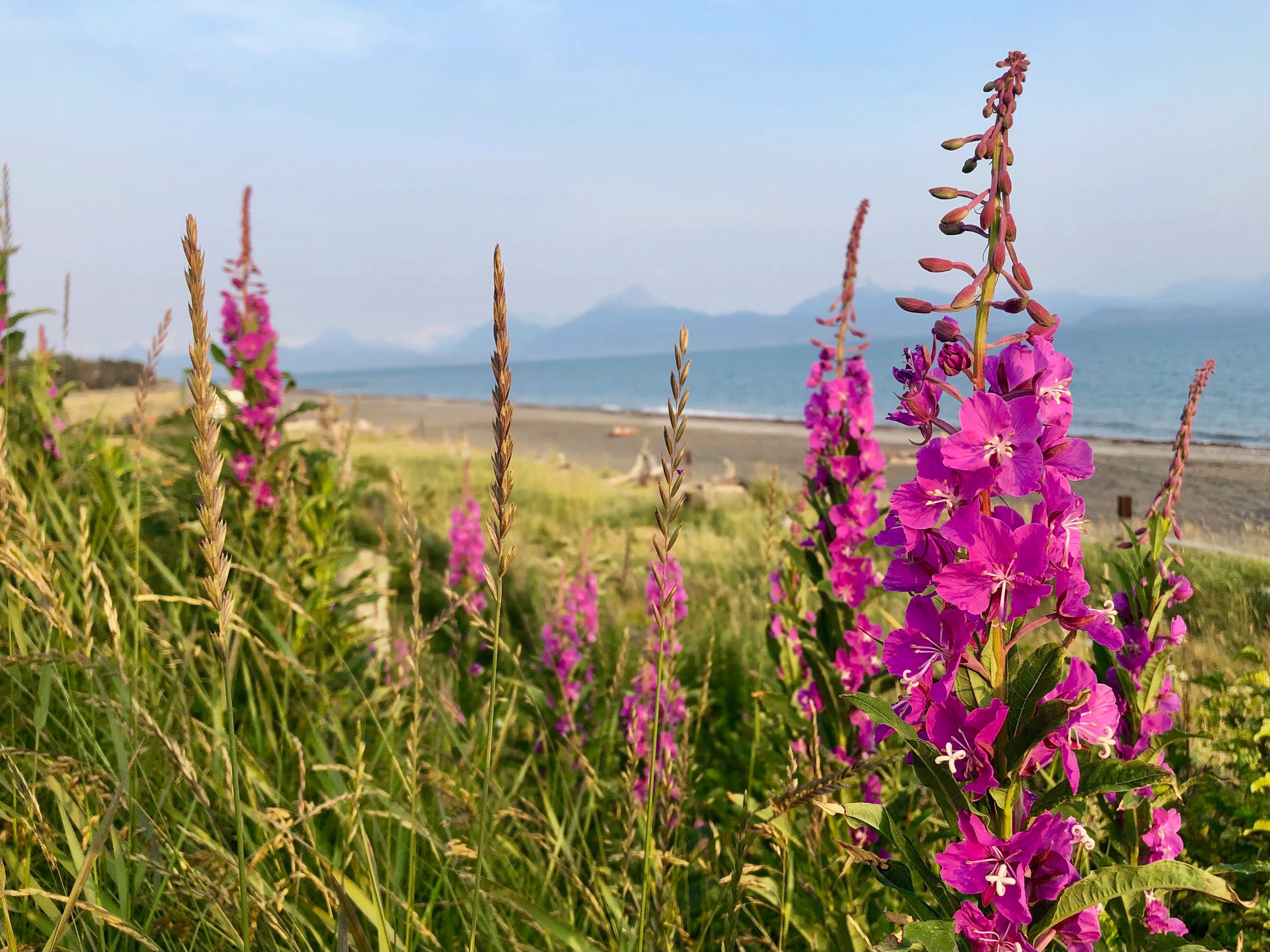
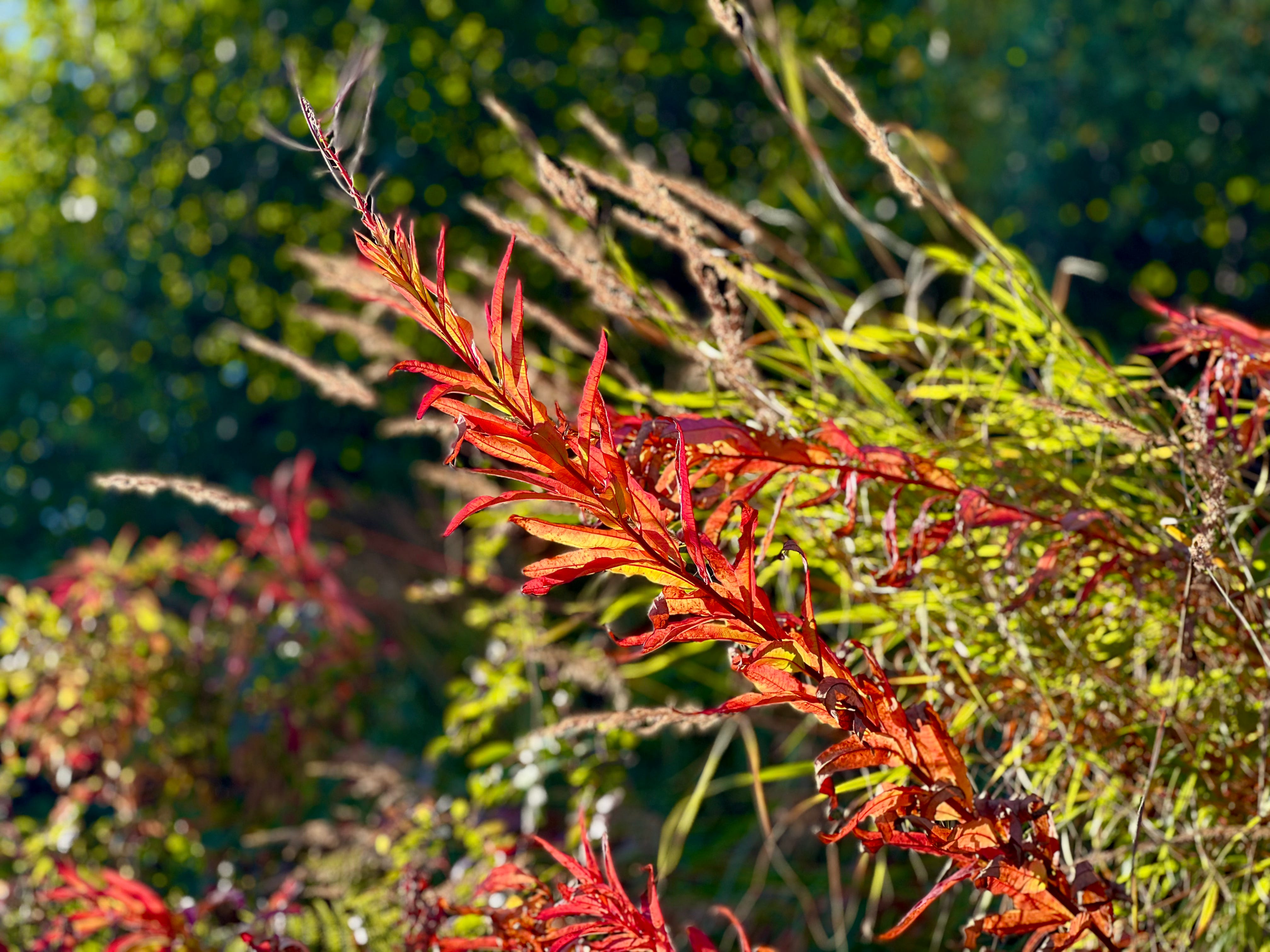
When I open my eyes, I notice the giant fireweed wildflower that has been growing up from the gravel beside my deck, the one that was bursting with life and color all summer, is now starting to shift its energy. The tips of the leaves are curling downward toward the earth; the plant is beginning the process of contracting, resetting, storing energy, turning inward.
//
“Can you find a spot to pull over?” I ask my husband as I whip around the passenger seat to grab my camera.
It is the first time we have driven through the aftermath of the devastating 2019 Swan Lake wildfires that tore through the Kenai Peninsula the month we moved to Alaska. Our first summer in the new state was supposed to be spent admiring the pristine views, soaking in the midnight sun, and adventuring through the rugged wilderness. Instead, we retreated behind closed doors and windows with thick smoke blocking both our views and our plans, as fierce fires ripped through over 170,000 acres of wilderness.
My husband pulls over to the side of the road, and as I step out of the car, I am struck by the vast starkness of the burn area. The once lush green landscape is now a sterile wasteland of ashes and soot, stretching as far as the eye can see.
I move carefully over burnt logs and fallen trees as I make my way over to what caught my eye from the car window—a single splash of vibrant magenta bursting out from the otherwise black earth. I recognize this wildflower as Fireweed, but I have never seen it in its most iconic form—standing proud, bright, and resilient amongst the rubble, offering a hint of hope to the surrounding darkness.
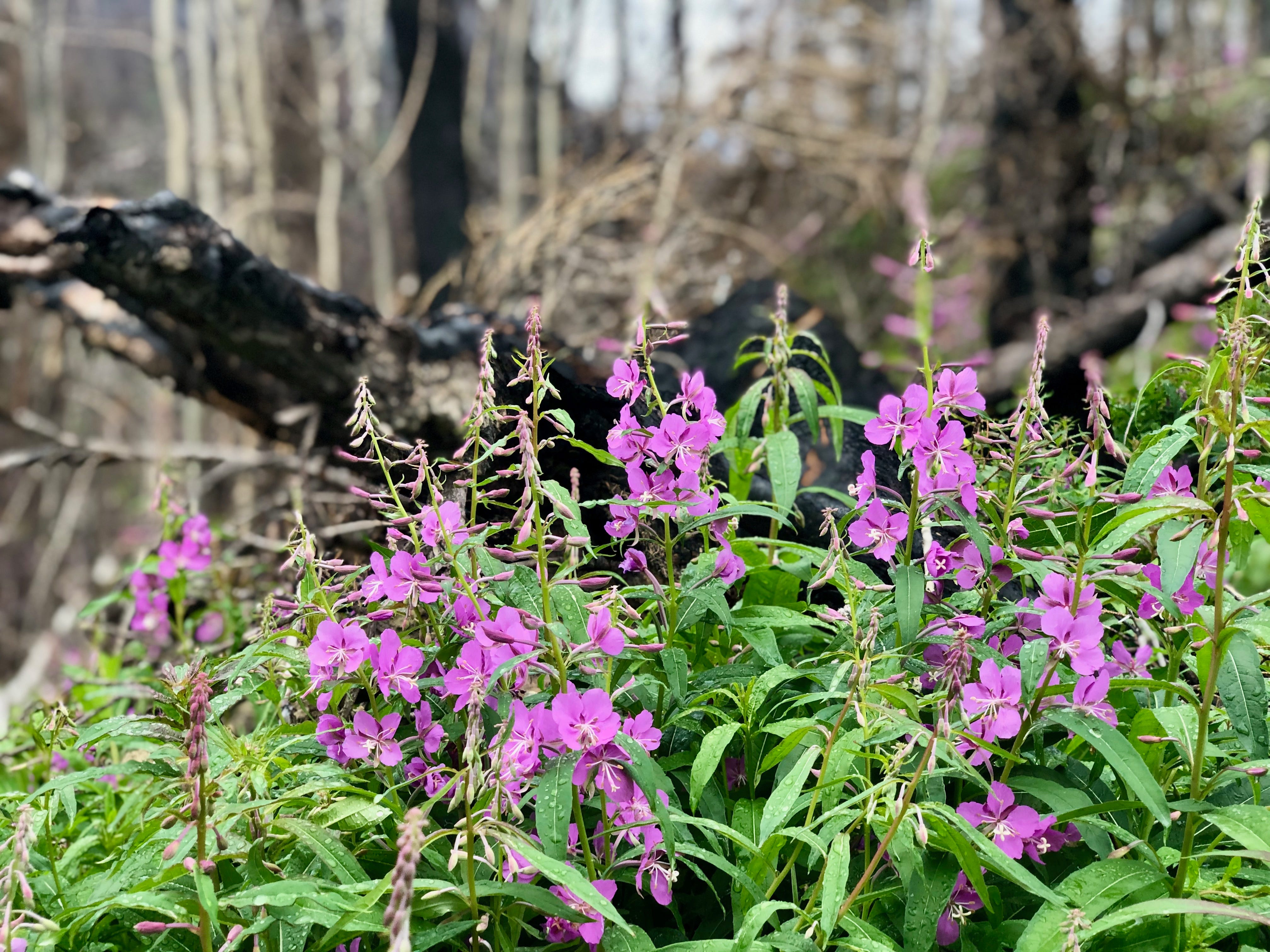
I snap a few photos before making my way back to the car, but I can’t get the image out of my head. And because I am who I am, I now need to know everything there is to know about this remarkable wildflower.
During my research (aka Google frenzy), I learn that fireweed has long been a symbol of resilience in coastal Alaska, holding both cultural and ecological significance. Its life begins as a tiny seed that can remain dormant for years, waiting for the right conditions to sprout. Fireweed thrives in some of the most rugged and lifeless places on earth like burn areas, glacial retreats, and land disturbed by human activity. Its existence in these otherwise barren areas helps to stabilize the soil so that other plants and vegetation can grow.
During the summer months, fireweed matures to heights sometimes over 6ft tall (!!) and produces a stalk of vibrant magenta flowers that can be seen for miles. The flowers are not only stunning, but they also provide a food source for various pollinators and animals contributing to the overall health of the ecosystem.
As fall arrives and temperatures chill, fireweed instinctively shifts its energy from providing to conserving. It produces fluffy seed pods that are carried off by the wind, then its leaves turn a vibrant orange, then brown, then fall to the earth until only a skeleton of stems remains.
At this point it may look like the plant that was once vibrant and full of life has nothing left to give, but under the earth its roots remain alive, storing energy for the next season.1
//
I stand on the deck a moment longer as I watch the fireweed dance in the breeze. Recognizing the tips of my own leaves are turning downward, I know it is time to shift. I let the crisp air fill my lungs once more before reaching in my pocket, pulling out my phone, and turning on “Do Not Disturb.”
Maybe the true magic of fireweed is in the fact that it doesn’t bloom year-round. It knows when to contract, reset, store energy, rest.
There will be a seasons of vibrancy again—times when I will have the capacity to extend in every direction, to show up in the rugged, lifeless places and offer glimmers of hope. But right now, I need to pull that energy inward, to nourish what lies just beneath the surface—connecting with friends, embracing my children, creating art, sharing meals. I can’t fix what’s wrong with the world, but I can turn off the noise and store energy for the next season.
I turn back towards the chaos inside, but with fresh eyes, it no longer feels quite so chaotic. Like the fireweed, I am giving myself permission to expand and contract with the seasons, holding on to hope that beauty will grow from the ashes.
This post is part of a blog hop with Exhale—an online community of women pursuing creativity alongside motherhood, led by the writing team behind Coffee + Crumbs. Click here to view the next post in the series “Reset.”
https://katmai-wilderness.com/news/things-to-do/the-lifecycle-and-growth-of-fireweed-in-alaskan-coastal-areas/
The way you describedd trying to not exist in an echo-chamber, instead reading on both sides to educate yourself of different experiences and perspectives in order to hopefully find a middle ground- and then to instead be left with the question of how can humans be so hateful? Same. And your conclusion and learning from the fireweed- oof. Thank you for writing these words- me too.
Beautiful connections between the lessons in nature and our own lives. I enjoyed learning from your knowledge on fireweed; thank you for sharing!